- Our People
- Whiteboard
Consisting of two parts, the Town Hall section is for
important message from the management.
While the other part is for important announcement
from supporting team like IT and HR. - TH


Delta Future Industry Summit 2026 Convenes Government and Industry Leaders to Advance Thailand's AI and Electrification Infrastructure
By DET Marcom - Published September 04, 2026

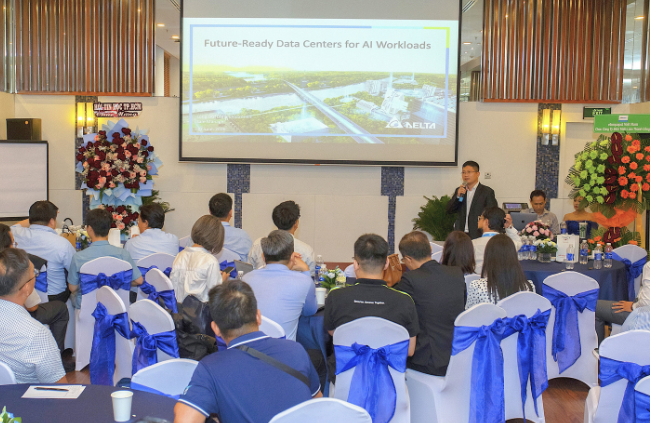
For many years, our Delta Future Industry Summit has brought together government, business and technology leaders to turn conversations about the future into practical pathways for Thailand’s industrial development.
In 2026, we focused on one of the country’s most pressing questions: as AI and electrification accelerate, is Thailand’s infrastructure ready to keep up? Under the theme “Advancing Thailand’s Infrastructure for AI and Electrification Evolution,” the summit examined what must happen behind the technology from strengthening energy systems and expanding data center capabilities to developing a future-ready workforce to ensure Thailand can capture new opportunities and remain competitive.
This year, we were honored to welcome H.E. Mr. Varawut Silpa-archa, Minister of Industry, who delivered the opening address. He emphasized that Thailand’s transition toward AI, electrification and intelligent industry cannot be achieved by the government or private sector alone. It requires collaboration among policymakers, businesses, universities and entrepreneurs, together with workforce development to equip people with the skills needed to participate in future industries.
In his welcome remarks, Mr. Victor Cheng, CEO of Delta Electronics (Thailand) PCL, highlighted Thailand’s strong potential, supported by an established manufacturing ecosystem, supportive business policies and a growing skilled workforce. He also pointed to a key challenge: rising demand for computing power and electrified systems is placing greater pressure on the country’s energy infrastructure and industrial capabilities. Our summit therefore serves as an important platform for encouraging cross-sector dialogue, addressing shared challenges and strengthening Thailand’s long-term competitiveness.
AI Growth Begins with Energy Readiness
One of the summit’s key messages was that AI relies on physical infrastructure. Behind every AI model are data centers, electricity, cooling technologies and reliable power systems.
Dr. Ettikan Kandasamy Karuppiah, Technologist and Director for Asia Pacific South at NVIDIA Corporation discussed how the expansion of AI infrastructure is increasing the need for more efficient power use, sustainable operations and closer collaboration across the technology ecosystem.
From Using AI to Rethinking the Business
Mr. Anothai Wettayakorn, Managing Director and Technology Leader of IBM Thailand explored how organizations are progressing from using AI to support individual tasks toward redesigning workflows and redefining their businesses. He also introduced the emerging potential of quantum computing and how it may influence the next stage of technological transformation.
The discussion showed that AI adoption is not simply about adding new tools. It also requires organizations to rethink their processes, build new capabilities and prepare people to work in different ways.
The first panel “Energy Infrastructure Readiness in the Advancement of Data Centers in Thailand,” expanded on this topic by examining how rising data center investment is changing Thailand’s electricity requirements. Experts from GPSC, Bangkok Bank and Delta Electronics Southeast Asia & Oceania discussed the need for coordinated planning among energy providers, financial institutions, technology companies and data center operators.
The second panel titled “How Will Industrial and Building Automation Shape Sustainable Manufacturing in Thailand?” examined how connected automation, operational data, digital twins and intelligent building technologies can support sustainable manufacturing. Experts from Lumentum, Ally Logistics Property, DHL Express and our Delta Thailand team shared practical perspectives on how these technologies can improve productivity, strengthen energy management and enable better-informed decisions across factories, industrial properties and logistics operations.

Alongside the discussions, participants experienced our integrated solutions for sustainable modular data centers, smart microgrids, AI-driven manufacturing and digital twins, as well as smart buildings and AI-powered security. The showcases demonstrated how capabilities from across Delta can work together to address real industry needs.
The summit placed Delta’s strategic direction and contribution to Thailand’s development within a broader national context. Our knowledge and expertise in energy management, automation and digital technologies are becoming essential components of the infrastructure supporting AI, next-generation industries and Thailand’s sustainable growth.





 Previous