A bi-monthly magazine dedicated to the Delta Electronics family in India, Southeast Asia and Australia.

- Our People
- Whiteboard
Consisting of two parts, the Town Hall section is for
important message from the management.
While the other part is for important announcement
from supporting team like IT and HR. - TH


3 Small Habits, Real Impact
By DET Marcom - Published May 28, 2026
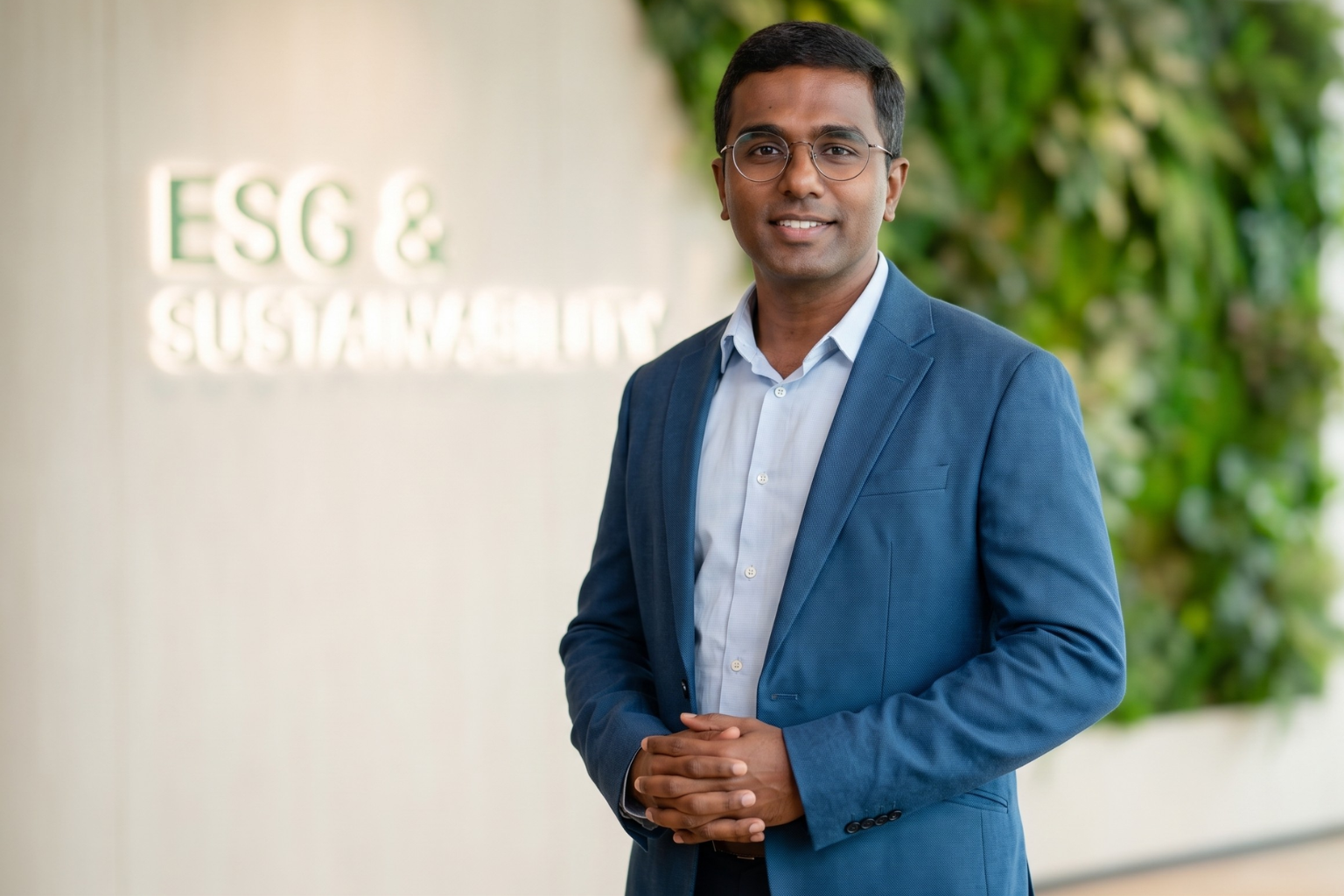 As World Environment Day approaches on June 5, we speak with Karthikeyan Arun, better known as Karthik, ESG Business Architect, Delta Singapore, about ESG transformation, commercial value, and three small habits that can create real impact.
For Karthik, World Environment Day is a reminder of how Delta can help customers reduce their environmental and energy footprint while also building stronger, more sustainable businesses.
“It is not only about saving money,” he says. “It is also about helping clients play their part in running a sustainable business.”
That same mindset follows him outside work too, from reducing single-use plastics to choosing public transport, traveling when necessary, and making more sustainable decisions in daily life.
 Where ESG Meets Commercial Value
In Karthik’s role as an ESG Business Architect, sustainability is not treated as a separate topic from business. It has to connect with real commercial value.
“We are not just talking about ESG implementation,” he explains. “We are ensuring that it actually makes commercial sense.”
That means working with clients to understand their challenges, objectives, and carbon reduction goals, then shaping Delta’s solutions to help them move forward. His work often brings together many teams, including sales, solution architects, engineers, ESG teams, consulting teams, and marketing.
The goal is not only to provide a product or solution. It is to create impact, manage the client engagement, and help companies make ESG transformation practical, profitable, and achievable.
ESG Fact You May Not Know
When people think about reducing carbon emissions, they often think about switching off lights, saving electricity, or using less water. These actions matter, but Karthik points out that the biggest part of a company’s emissions is often less visible.
In many manufacturing businesses, Scope 1 and Scope 2 emissions, such as direct fuel use, company vehicles, and purchased electricity, may represent a smaller share of the total footprint. The larger portion often sits in Scope 3, which includes supply chains, purchased goods and materials, employee commuting, logistics, and other activities across the value chain.
For a manufacturing company like Delta, the supply chain plays a major role. That is why working with suppliers and clients is so important. Reducing emissions is not only about what happens inside one office or factory. It also means working across the entire value chain to create wider impact.
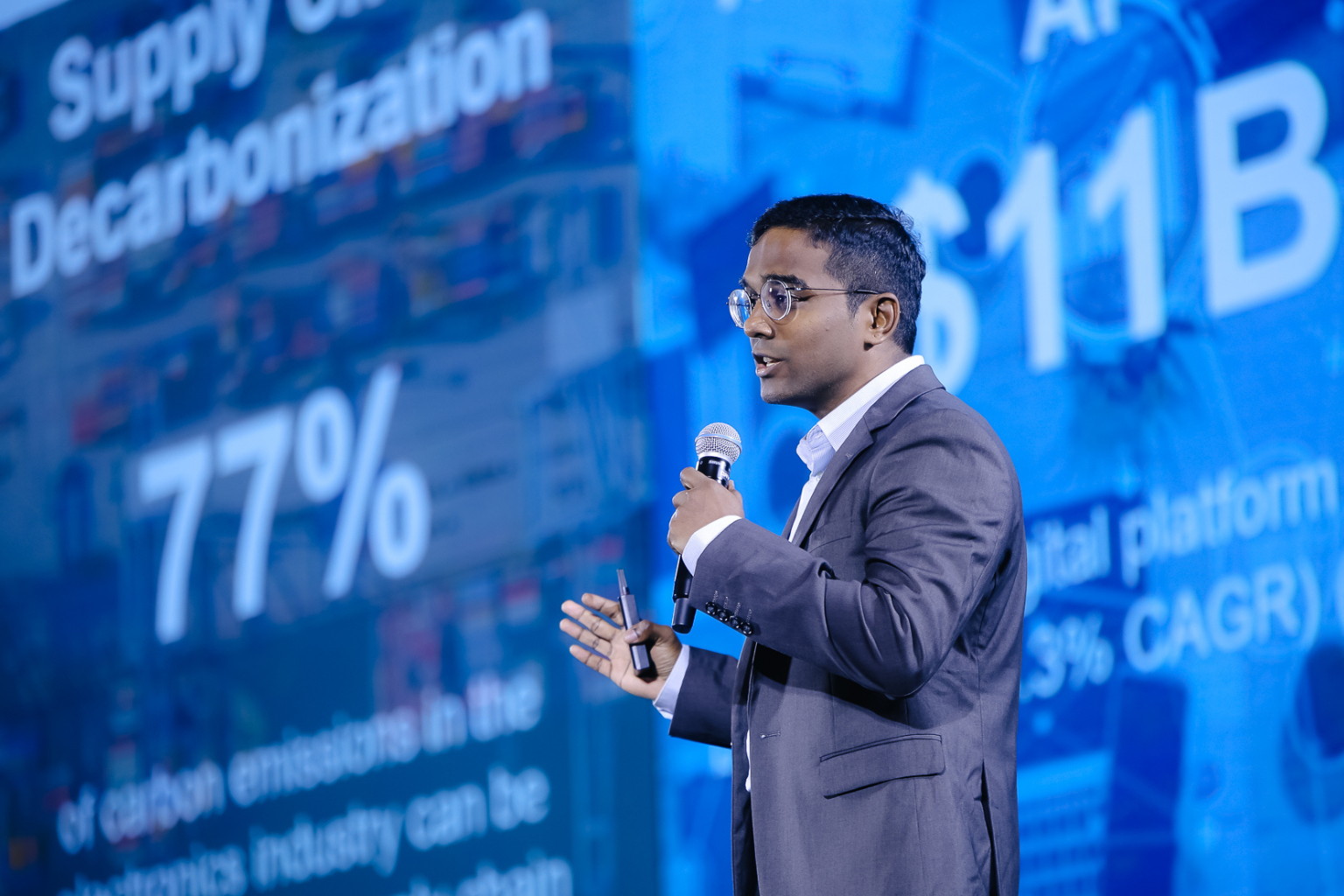 Technology Matters, But People Make It Happen
When people think about reducing carbon emissions, they often think about switching off lights, saving electricity, or using less water. These actions matter, but Karthik points out that the biggest part of a company’s emissions is often less visible.
In many manufacturing businesses, Scope 1 and Scope 2 emissions, such as direct fuel use, company vehicles, and purchased electricity, may represent a smaller share of the total footprint. The larger portion often sits in Scope 3, which includes supply chains, purchased goods and materials, employee commuting, logistics, and other activities across the value chain.
For a manufacturing company like Delta, the supply chain plays a major role. That is why working with suppliers and clients is so important. Reducing emissions is not only about what happens inside one office or factory. It also means working across the entire value chain to create wider impact.
Technology Matters, But People Make It HappenAfter years in ESG, one lesson has shaped the way Karthik leads his team: technology is important, but stakeholder management is even more important.
There is often a technology available, or a partner that can help develop one. The harder part is convincing people why change matters
There is often a technology available, or a partner that can help develop one. The harder part is convincing people why change matters
“Everyone may know that something can reduce energy,” he says. “But why is not everybody doing it? Sometimes it is not because of technology. It is because of people.”
That is why ESG work is also human work. It involves listening, explaining, aligning priorities, and helping different stakeholders understand how sustainability connects to their goals.
In the end, driving ESG progress is not only about systems or solutions. It is about building trust and bringing people along.
That is why ESG work is also human work. It involves listening, explaining, aligning priorities, and helping different stakeholders understand how sustainability connects to their goals.
In the end, driving ESG progress is not only about systems or solutions. It is about building trust and bringing people along.
Why ESG Still Inspires Him
Karthik has worked across areas such as microgrids, energy efficiency, and sustainability. What keeps him motivated is the combination of three things: challenge, impact, and the chance to learn and grow while contributing to making positive impact for the environment.
ESG is always evolving. Regulations change, technologies improve, expectations grow, and stakeholder needs become more complex. That makes the work challenging and exciting.
There is also real impact. When a company follows through on an ESG recommendation, improves its operations, or reduces its carbon footprint, the results can be seen.
And then there is the chance to learn and grow. ESG touches technology, finance, stakeholder engagement, reporting platforms, consulting, and more. For someone who likes to keep learning, the field never stands still.
“It is challenging, impactful, and allows me to learn and grow,” he says. “That is why it is important to me.”
 Three Habits for a Better Daily Life
There is also real impact. When a company follows through on an ESG recommendation, improves its operations, or reduces its carbon footprint, the results can be seen.
And then there is the chance to learn and grow. ESG touches technology, finance, stakeholder engagement, reporting platforms, consulting, and more. For someone who likes to keep learning, the field never stands still.
“It is challenging, impactful, and allows me to learn and grow,” he says. “That is why it is important to me.”
Three Habits for a Better Daily LifeOutside work, Karthik believes in keeping fit and staying balanced. He runs, plays sports, goes to the gym, practices yoga, meditates, and plays badminton. Yoga, he says, was something he discovered during Covid, after working from home led to body aches and office-syndrome pain.
“At first, I thought yoga would only help relieve my body pain,” he says. “Then I realized it is one of the best exercises for both body and mind.”
He also enjoys learning, including online courses about AI.
At home, sustainability is part of family life. His family avoids plastic bags as much as possible, brings reusable bags when shopping, switches off appliances when not in use, saves water, and walks whenever they can.
Walking has become more than just a green habit. It is also family time.
“If it is around 20 minutes, walking is totally normal,” he says. “We use that time to bond as a family.”
“At first, I thought yoga would only help relieve my body pain,” he says. “Then I realized it is one of the best exercises for both body and mind.”
He also enjoys learning, including online courses about AI.
At home, sustainability is part of family life. His family avoids plastic bags as much as possible, brings reusable bags when shopping, switches off appliances when not in use, saves water, and walks whenever they can.
Walking has become more than just a green habit. It is also family time.
“If it is around 20 minutes, walking is totally normal,” he says. “We use that time to bond as a family.”
His three simple habits are easy to remember: minimize plastic, reduce electricity and water consumption, and walk more.
Building a Culture That Goes Beyond Posters
For Karthik, creating an energy-saving and sustainability culture takes more than posters or dashboards. Those are useful, but they are only the beginning.
The message has to reach frontline managers, who then bring it to their teams. Good ideas from employees should be recognized and shared. Small improvements from the floor, the office, or the factory can inspire others when they are visible.
He believes companies can learn from safety culture. In many workplaces, safety is discussed every day because it matters.
Sustainability can be treated the same way.
The message has to reach frontline managers, who then bring it to their teams. Good ideas from employees should be recognized and shared. Small improvements from the floor, the office, or the factory can inspire others when they are visible.
He believes companies can learn from safety culture. In many workplaces, safety is discussed every day because it matters.
Sustainability can be treated the same way.
A short daily discussion on energy efficiency, even 15 minutes in a morning meeting, can help teams focus on practical actions. Leaders can also set the example by using public transport, company buses, or more sustainable options when possible.
Younger employees, especially, are often purpose driven. They want to work for companies that stand for something meaningful.
Younger employees, especially, are often purpose driven. They want to work for companies that stand for something meaningful.
“When a company gives this kind of direction, they feel proud,” Karthik says. “They can share it with their friends and family. It gives purpose.”
Bringing Delta’s Green Spirit
Bringing Delta’s Green Spirit
Many people see Delta as a green company. That reputation is valuable, but it also comes with responsibility.
For Karthik, every employee can be an ambassador for Delta’s sustainability culture. Whether meeting clients, working in factories, supporting operations, or making personal choices at home, we all represent what Delta stands for.
If we speak about saving energy, we should also show it in the way we work and live. If we promote sustainability, we should make it part of our habits. If we believe in impact, we should share good practices so others can benefit too.
It is a timely reminder that sustainability does not always start with one big action. Sometimes it starts with a reusable bag, a 20-minute walk, a switched-off appliance, a shared idea, or a team conversation in the morning.
Small actions become culture when people repeat them together. And culture becomes impact when everyone plays a part.
If we speak about saving energy, we should also show it in the way we work and live. If we promote sustainability, we should make it part of our habits. If we believe in impact, we should share good practices so others can benefit too.
It is a timely reminder that sustainability does not always start with one big action. Sometimes it starts with a reusable bag, a 20-minute walk, a switched-off appliance, a shared idea, or a team conversation in the morning.
Small actions become culture when people repeat them together. And culture becomes impact when everyone plays a part.

Share ![facebook]()
![linkedin]()





 Previous